
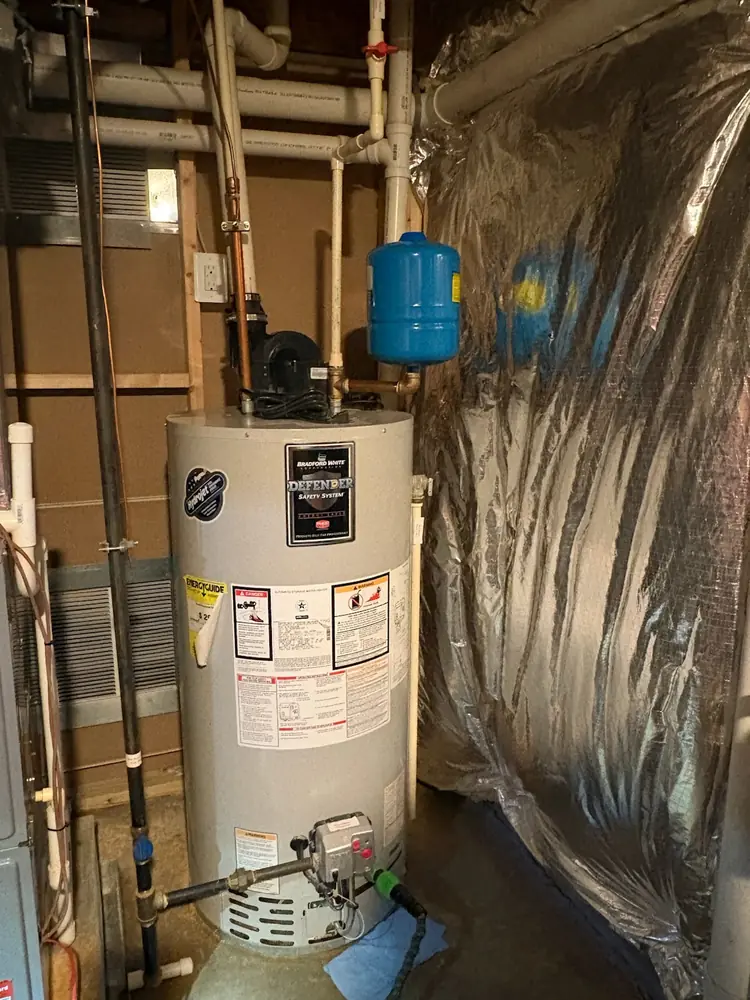
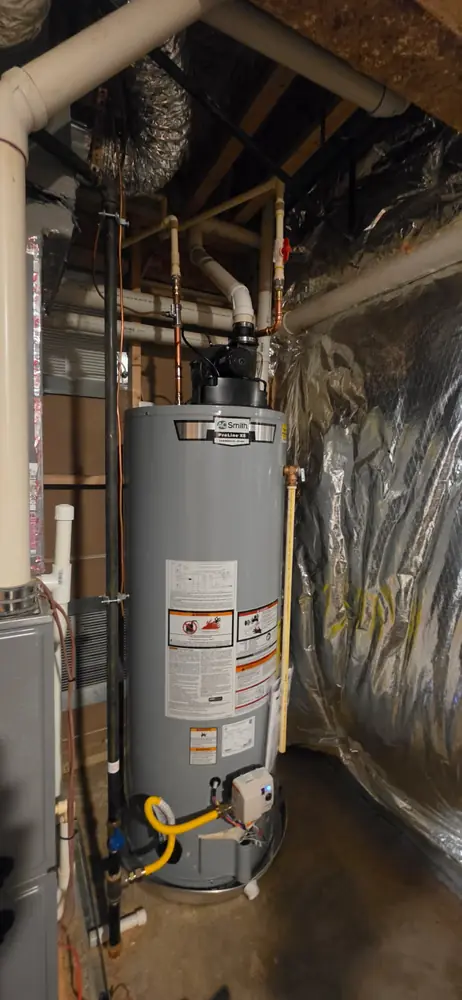
Power vent water heaters use a blower to push exhaust out through a side wall instead of up a chimney. That's why they're popular in Glenmont basements and finished spaces — but it also means more parts that can fail.
Common power vent problems
- Blower runs but the burner never lights
- Loud whining or rattling from the fan motor
- Error or status light blinking on the control
- Water in the vent pipe or a gurgling sound
- Heater shuts down on windy days
- Tripped GFCI or no power to the unit
How a power vent works (and why it fails)
A standard gas heater relies on hot air rising up a chimney. A power vent adds an electric blower that pushes exhaust out through PVC pipe. A pressure switch confirms the blower is working before the gas valve opens. If that switch sees a blocked vent, a weak blower, or a cracked hose, it shuts the burner down — that's a safety feature, not a malfunction.
Glenmont homes: what we see
Many mid-century Glenmont basements were finished later, and a power vent was the easy way to keep the water heater there. Tight closets can starve the burner of combustion air, which we check for.
Most Glenmont homes are on WSSC Water, which licenses plumbers in its service area and runs the cross-connection (backflow) program. Mineral buildup still happens over time, which is why flushing tanks and descaling tankless units pays off.
Typical repairs
Pressure switch replacement, clearing vent terminations (bird nests, leaves, snow), replacing cracked sensing tubes, blower motor replacement, and fixing vent pipe slope so condensation drains properly. On units over 10 years old with a failing blower, we'll price replacement too so you can compare.
Replacement options
You can replace like-for-like with a new power vent (usually reusing your existing PVC run if it's in good shape), or move to a tankless unit, which also vents through the side wall. Either way, the vent run has to meet the manufacturer's length and clearance limits — we measure it before recommending a model.
How HiTrend handles power vent water heater jobs in Glenmont
- Send a photo of the unit label if you can
- Diagnose blower, switch, and vent
- Written price for repair or replacement
- Repair/install with vent run to manufacturer spec
- Test fire and verify proper venting
Quick checks
Make sure the unit is plugged in and the outlet or GFCI isn't tripped. Go outside and look at the vent termination — clear any leaves, snow, or nests. Then unplug the heater for 30 seconds and plug it back in to reset. If it still won't fire, call us.
Serving Glenmont neighborhoods
We handle power vent water heater service throughout Glenmont, including Glenmont Village, Glenmont Forest, Layhill, and the area around Wheaton Regional Park (ZIP 20906). Also nearby: Power Vent Water Heater in Kemp Mill, Power Vent Water Heater in Aspen Hill, Power Vent Water Heater in Kensington, Power Vent Water Heater in Olney.
Frequently asked questions
Why does my power vent heater need electricity?
The blower that pushes exhaust outside is electric. No power means no hot water, even though it burns gas.
How much longer do power vents last in Glenmont?
The tank lasts about as long as any gas tank — 8–12 years. The blower may need replacing sooner.
Is a power vent louder than a regular water heater?
Yes, you'll hear the fan when it runs. A worn-out blower gets noticeably louder.
Can I replace a power vent with tankless?
Usually yes. Tankless units also vent through the wall, though the gas line may need upsizing.