

A Maryland homeowner's gas water heater started leaking months ago, so it was drained and the gas was capped. They asked us to estimate a replacement from photos. Here's what we recommended and what the estimate includes.
The question
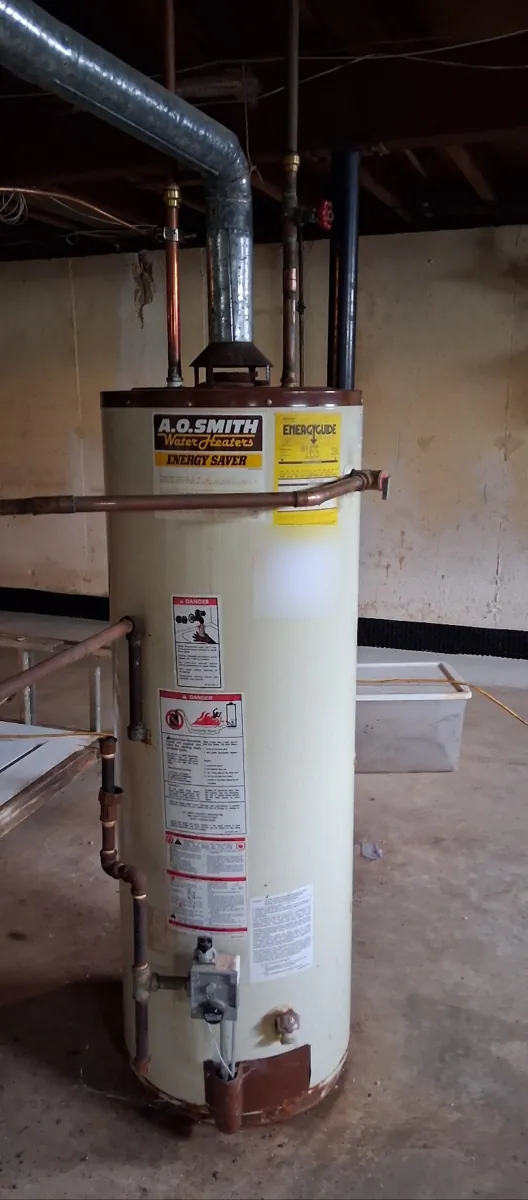
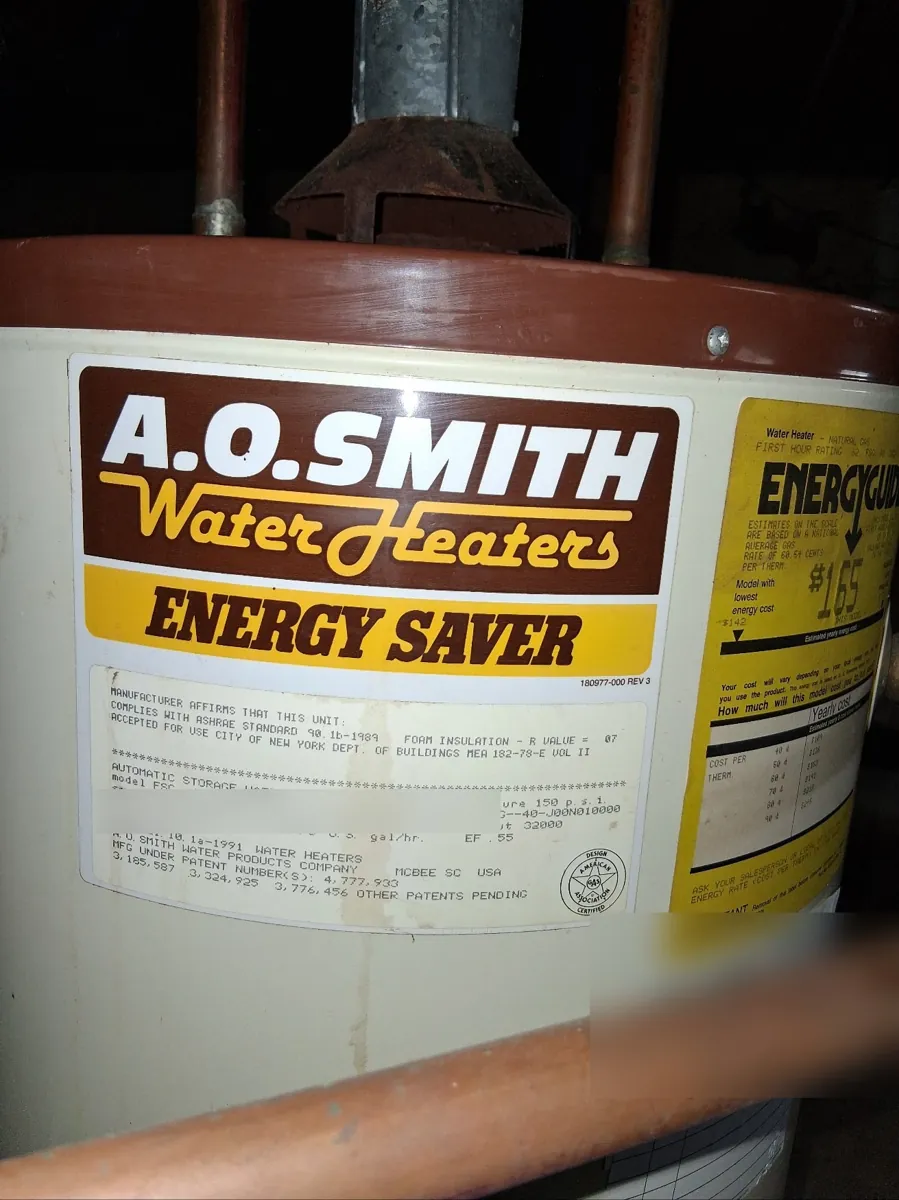
The homeowner's 40-gallon A.O. Smith natural gas tank water heater began leaking water a few months earlier. When it started leaking, it was drained and the gas to it was capped, and it had been out of service since. They asked for a replacement estimate and wanted to know whether we could give one without a site visit.
What's going on
When a leak comes from the tank itself, the heater can't be repaired, because the inner tank has corroded through. Replacement is the fix. For a straight swap, a rough estimate can usually be given from two photos: the heater's nameplate (it lists the fuel type, capacity and model) and a zoomed-out picture showing the venting, gas line and water connections around it.
What we recommended
- Asked the homeowner for a photo of the water heater's nameplate and a zoomed-out photo of the installation.
- Reviewed the photos and recommended replacing it with a similar gas unit.
- Sent a written rough estimate covering the new heater, all materials, an expansion tank, a drain pan and the county inspection.
What the estimate covers
- New gas water heater, similar to the existing unit
- All installation materials
- Thermal expansion tank
- Water heater drain pan
- County permit inspection
Tips for Brookeville homeowners
- If your water heater is leaking, shut off the gas (or power) and the cold-water supply, then drain it to limit damage until it's replaced.
- Take a clear photo of the nameplate. It lets a plumber quote a like-for-like replacement quickly.
- Compare quotes on what they include: expansion tank, drain pan, haul-away and permit inspection.
- A drain pan under the new heater helps protect floors if a future leak happens.