

A Damascus homeowner's 65-gallon electric water heater was leaking. We replaced it with an 80-gallon State commercial electric water heater, plus a new expansion tank, ball valve and drip pan, in a single visit.
The problem
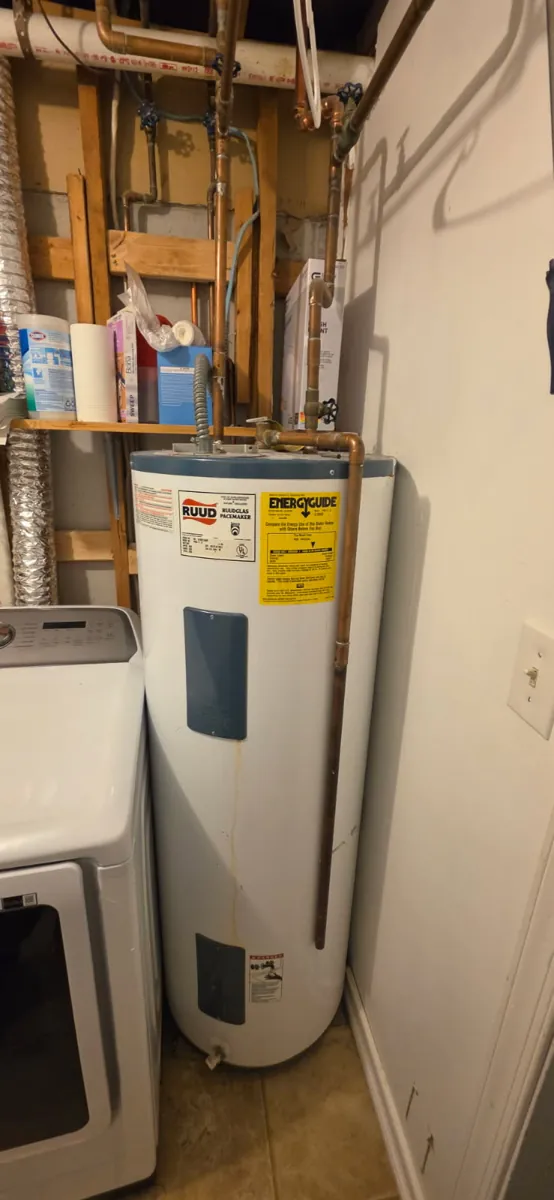
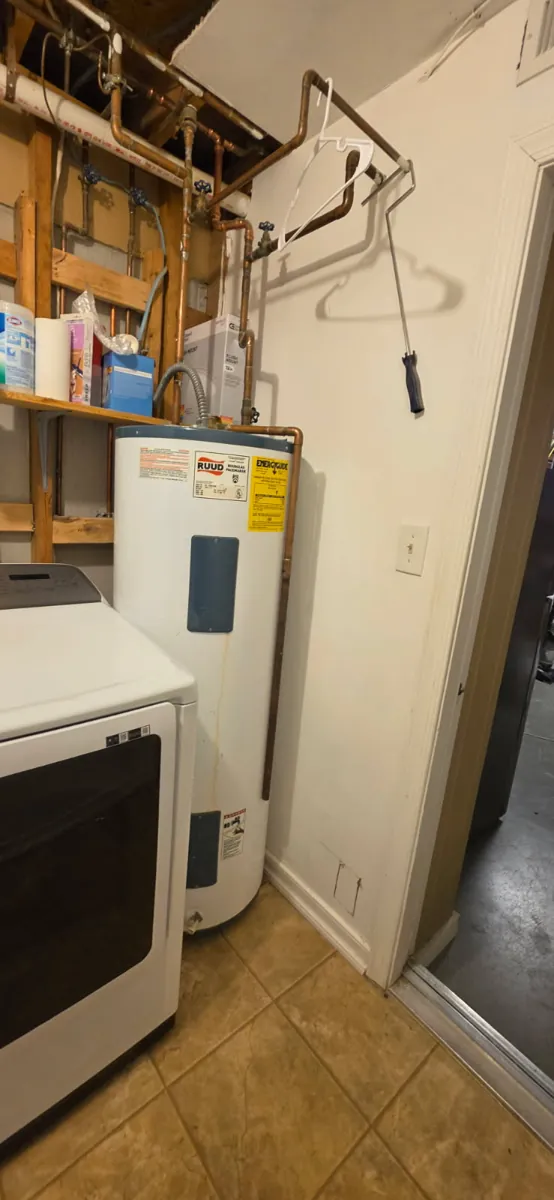
The 65-gallon electric tank water heater in the home's laundry area was leaking from under the tank, and the homeowner wanted it replaced as soon as possible.
What our technician found
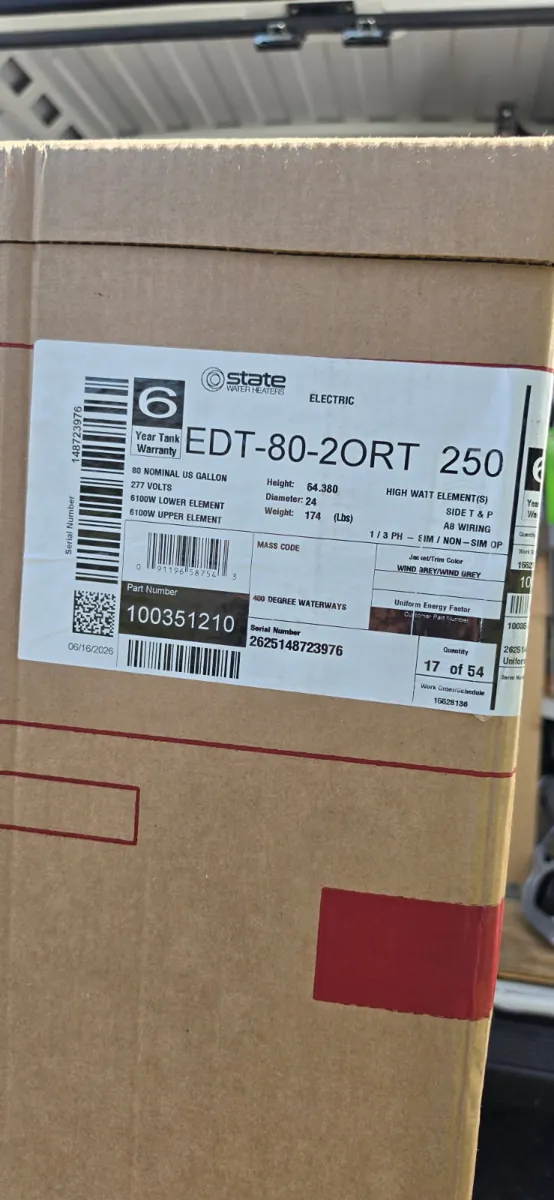
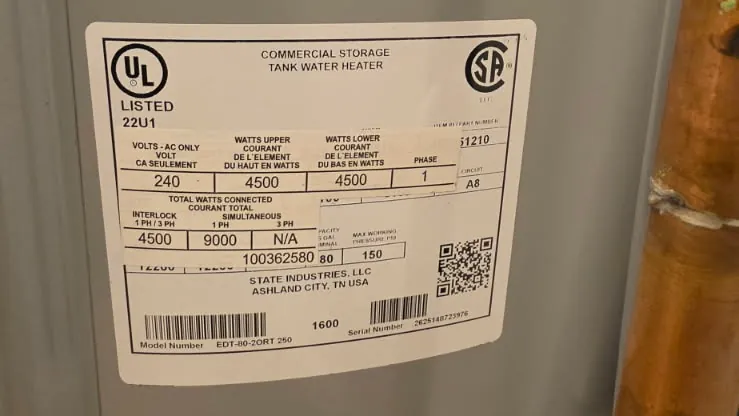
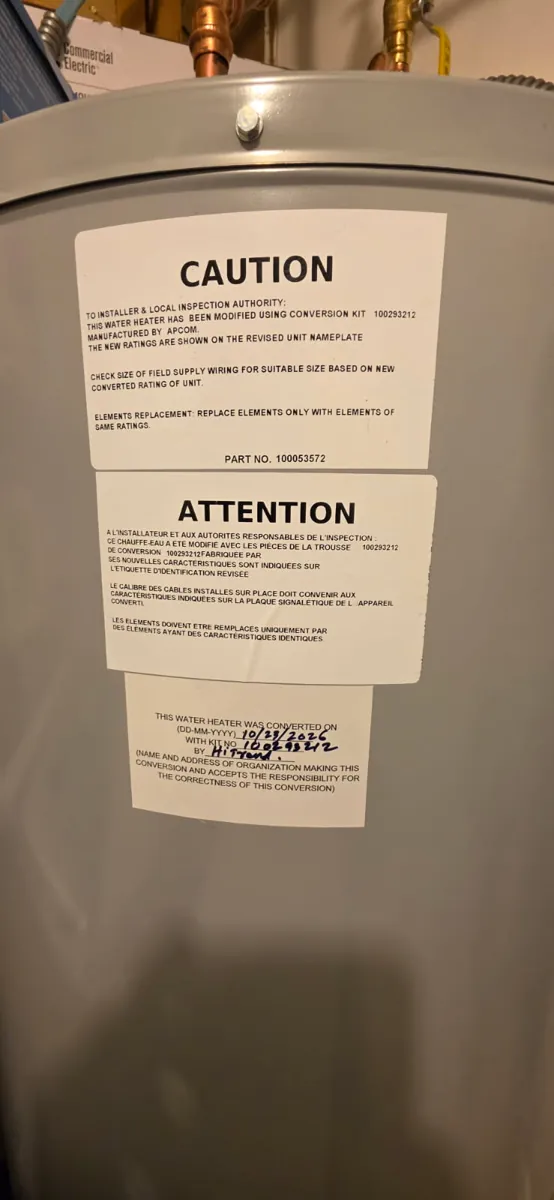
When a tank-style water heater leaks from the tank itself, it usually can't be repaired, so replacement is the normal fix. The replacement is an 80-gallon tank, up from 65 gallons, so it stores more hot water. The new heater carries a revised nameplate and a conversion sticker showing it was converted for a 240-volt home supply with a conversion kit. The manufacturer covers the tank with a 6-year warranty.
What we did
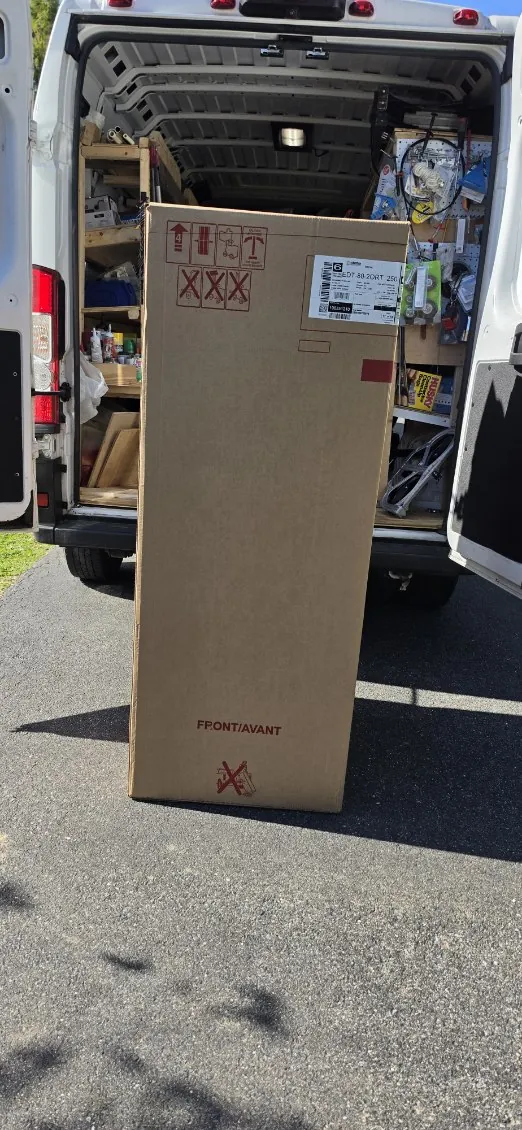
- Picked up the specific 80-gallon heater from a supply house, since it wasn't in stock locally.
- Removed the old 65-gallon electric water heater.
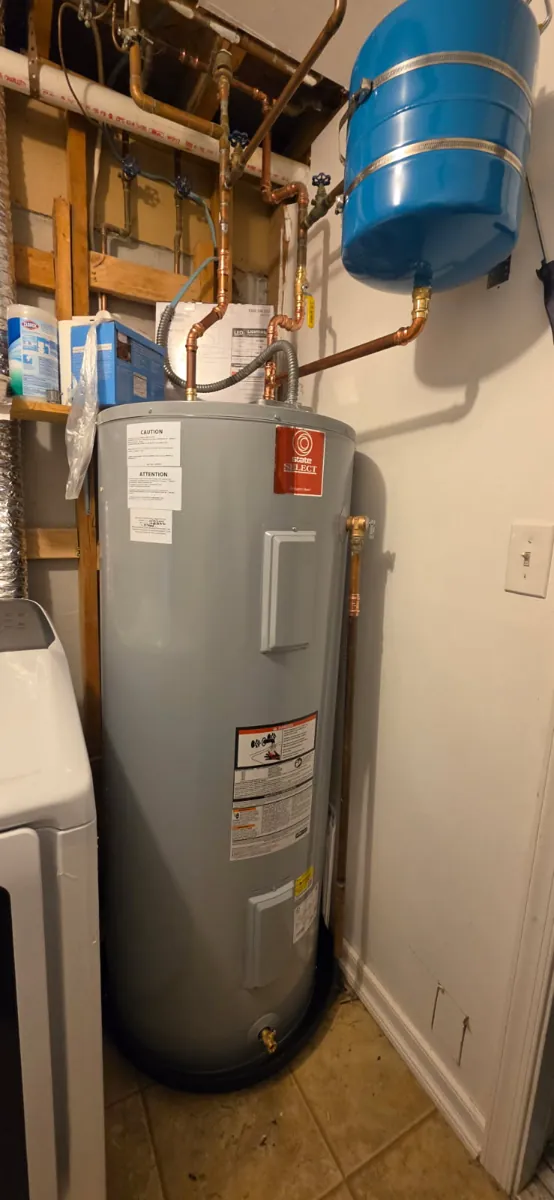
- Set the new 80-gallon State commercial electric water heater in a drip pan.
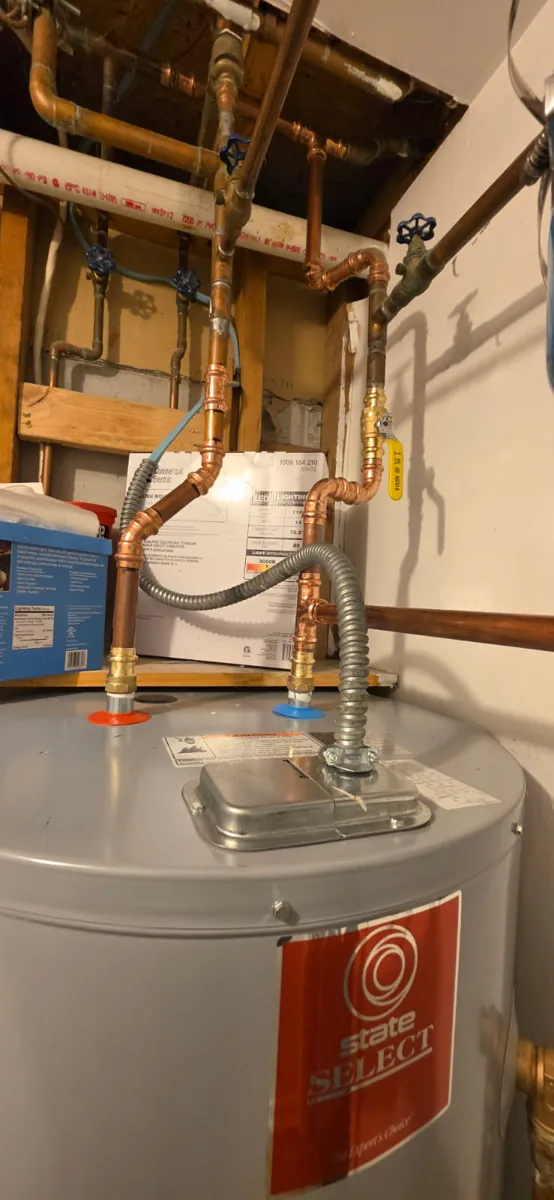
- Re-piped the hot and cold connections in copper, with a new ball valve on the supply line.
- Installed a new thermal expansion tank on the wall beside the heater.
- Reconnected the electrical supply in flexible metal conduit.
Parts used
- 80-gallon commercial electric water heater (State)
- Voltage conversion kit
- Thermal expansion tank
- Ball valve
- Water heater drip pan
- Copper pipe and fittings
The result
The new 80-gallon water heater was installed in a single visit, and the homeowner told us everything went well and our team was very fast.
Tips for Damascus homeowners
- Rust streaks running down the side of a water heater are a common warning sign. Have it checked before it turns into a leak.
- Going up in tank size? Make sure the space, the drip pan and the electrical circuit all suit the new unit.
- A thermal expansion tank protects your plumbing and the heater's relief valve from pressure build-up as water heats.
- A drip pan under a water heater in a finished area helps protect floors if a future leak happens.