

A Clarksburg homeowner reported a gas leak and wanted the flexible connector feeding their gas stove replaced. Our technician installed a new stainless steel gas connector the next morning.
The problem
The homeowner reported a gas leak and asked us to replace the flexible gas connector that feeds their stove. The connector sits in the cabinet right under the stove, and the homeowner wanted it done quickly.
What our technician found
A flexible appliance connector is the short corrugated line between the gas shutoff valve and the appliance. Connectors are not meant to last forever. Kinks, corrosion, and being moved around when an appliance is pulled out can all lead to a leak at the line or its fittings. Replacing the whole connector is the standard fix. Taping or patching a leaking gas line is not a safe repair.
What we did
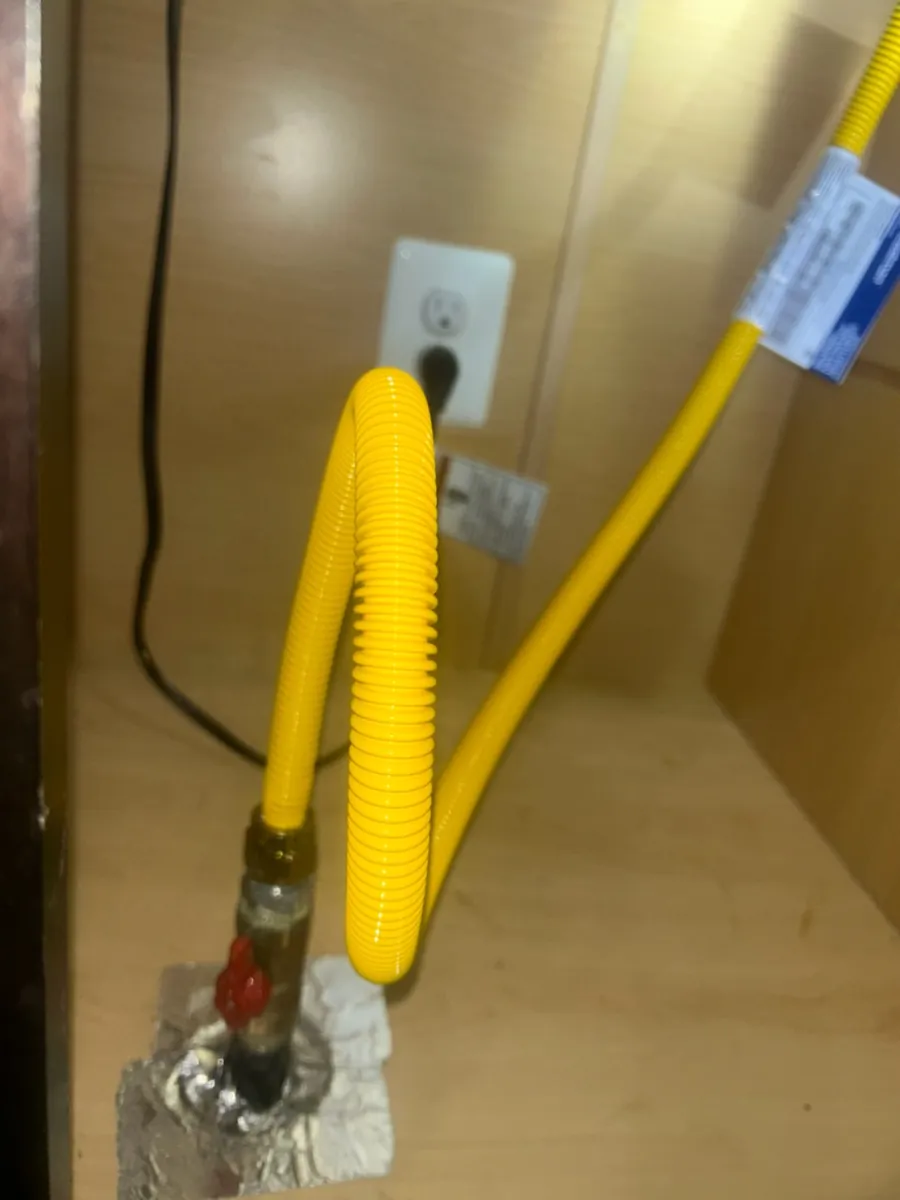
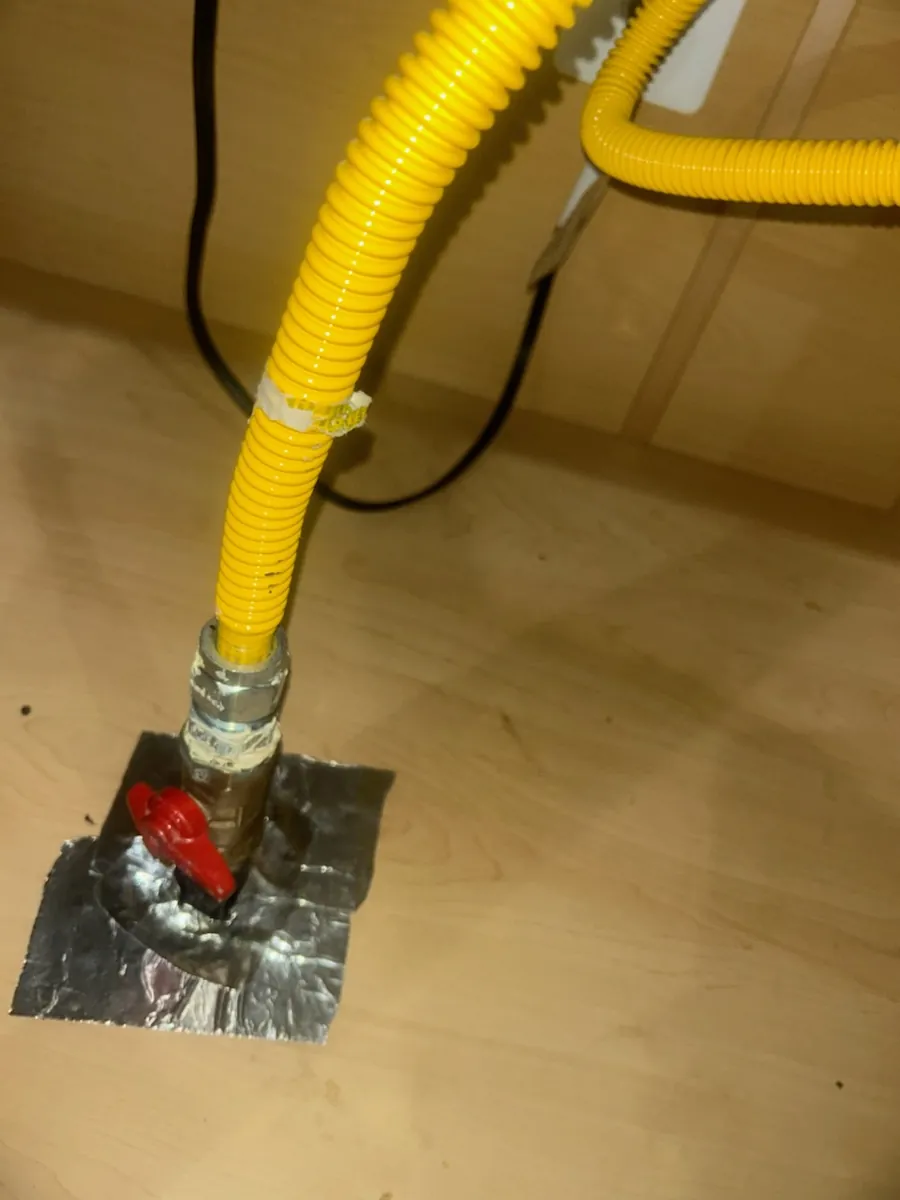
- Worked in the cabinet under the stove, where the gas line comes up through the floor to a shutoff valve.
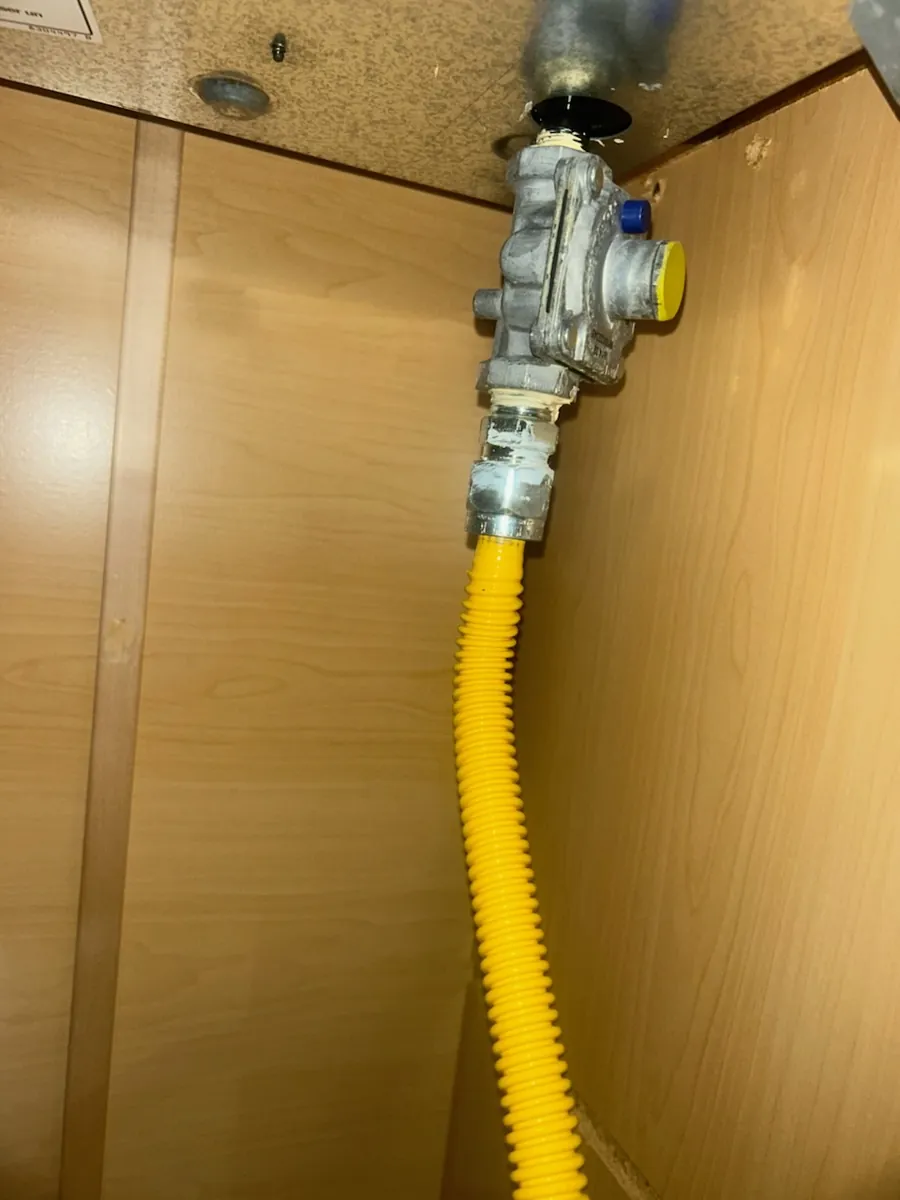
- Installed a new 48-inch coated stainless steel gas connector, which the homeowner had already picked up, between the floor shutoff valve and the gas fitting at the top of the cabinet that feeds the stove.
- Checked the new connections for gas leaks after the install.
Parts used
- Eastman 48-inch coated stainless steel gas appliance connector (1/2-inch)
The result
The new gas connector was installed the next morning, and its connections were leak-tested.
Tips for Clarksburg homeowners
- If you smell gas, leave the house first and call your gas company's emergency line from outside. Don't flip switches or use the stove.
- Know where the shutoff valve for your stove is. It's often a small valve with a lever behind the range or in the cabinet below a cooktop.
- Use a new connector whenever a gas appliance is replaced or moved. Don't reuse an old one.
- Avoid sharp bends in a flexible gas connector, and don't let it get pinched when you push the appliance back into place.