

Quick answer
Most people remember to drain the outdoor faucets in the fall. Fewer check their water pressure, the expansion tank on the water heater, the sump pump's backup, dry floor drains, and leak sensors in the basement. These five fall plumbing checks take about an hour, need little or no tools, and catch problems before winter makes them worse.
Already did the basics?
Our fall plumbing checklist covers the big ones: outdoor faucets, irrigation, the main shut-off, insulating pipes, the water heater and the sump pump. If you haven't done those, start there.
This list is the next layer. These are checks we often see skipped in Montgomery County homes, and each one heads off a problem that tends to show up in winter.
1. Check your water pressure
Water pressure that runs too high wears out faucets, toilet fill valves, washing machine hoses and water heater relief valves faster. Many homeowners never measure it.
A simple pressure gauge that screws onto an outdoor faucet costs little at a hardware store. Do this before you shut off the outdoor faucets for winter. Screw it on, open the faucet fully, and read it with nothing else running in the house. We generally like to see household water pressure between 40 and 70 psi.
- If the reading is above 70 psi, or your toilets refill with a loud rush and faucets spray hard, call us. Many homes have a pressure-reducing valve (PRV) where the water enters the house, and these wear out over time.
- If the pressure jumps around a lot or slowly creeps up overnight with nothing running, that also points to a worn PRV or a thermal expansion issue (see the next check).
2. Look at the water heater's expansion tank
Many water heaters have a small tank, often blue or white, mounted on the cold water line above them. As water heats, it expands. On homes with a check valve or pressure-reducing valve at the main, that extra water has nowhere to go, so the expansion tank gives it room.
When an expansion tank fails, pressure spikes every time the heater runs. The usual sign is a water heater relief valve that drips or a relief pipe that's wet at the end.
- Tap the tank gently. The half away from the pipe connection (the air side) should sound hollow. If the whole tank sounds solid, like it's full of water, it may be waterlogged. If water comes out when you press the air valve on the end, the internal bladder has failed.
- Look for rust or drips at the connection.
- If the relief valve on the water heater has been dripping, the expansion tank is one of the first things we check.
3. Test the sump pump's backup, not just the pump
Lots of people do the bucket test on their sump pump. Fewer check what happens when the main pump can't run. Heavy storms and power outages often arrive together.
If you have a battery backup pump, check the battery's age and charge indicator, and test it according to its manual. If you don't have any backup and your basement is finished, ask about one. A high-water alarm in the pit is a cheap extra warning that the pump isn't keeping up.
4. Refill dry floor drains and check the laundry drain
Floor drains in basements and laundry rooms have a trap that holds water. That water blocks sewer gas. When a drain never gets used, the water evaporates, and you get a sewer smell in the basement, often first noticed when the heat comes on and the air dries out.
Pour a bucket of water into each floor drain. If the smell comes back quickly, the trap may need a primer or the drain needs a closer look. While you're there, watch the washing machine drain during a cycle. Water backing up or gurgling at the standpipe is a sign of a partial clog that's easier to clear now than during the holidays.
5. Put leak sensors where water problems start
Battery-powered leak sensors are small, cheap and take a minute to set up. They sit on the floor and alert you, by a loud beep or a phone notification, when they get wet.
Put them where leaks start: next to the water heater, behind the washing machine, under the kitchen sink, near the sump pit and beside a basement bathroom. If you travel in winter or have a finished basement, consider a smart main-line shutoff that can turn off the water by itself.
From our jobs
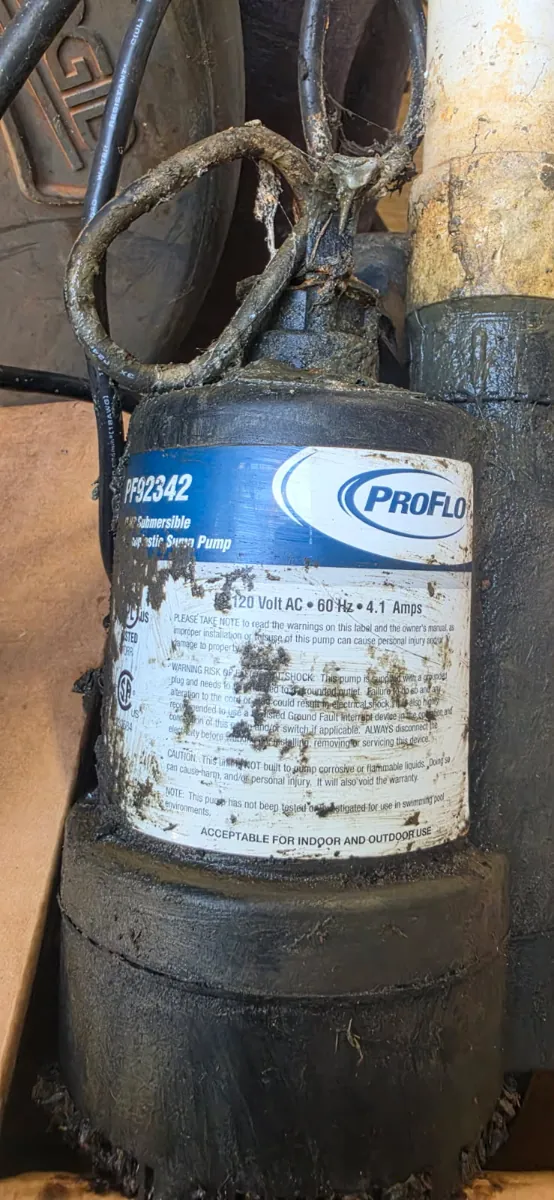 Sump pump replacement · Clarksburg, MD · October 2026Clarksburg Sump Pump Replacement: 10-Year-Old Pump Out, New Zoeller InA Clarksburg basement sump pump over 10 years old was leaking oil and had an electrical problem. We replaced it with a new Zoeller pump and check valve, then cleaned and flushed the pit.
Montgomery County specifics
- WSSC Water's winter advice includes knowing where your main shut-off valve is and making sure it works before cold weather.
Is this not for you?
All five checks are homeowner jobs, and you don't need a plumber to read a pressure gauge, tap an expansion tank, pour water down a floor drain or set out leak sensors. Call a plumber if the pressure reads high, the relief valve keeps dripping, the floor drain smell comes back, or a drain backs up. If your sump pump keeps tripping a breaker, an electrician may need to look at the circuit. If you're on a well, your pressure is set at the well's pressure switch, and a well contractor handles that equipment.
Frequently asked questions
Where do I find my pressure-reducing valve?
It's usually on the main water line just after it enters the house, near the main shut-off. It often looks like a brass bell shape with an adjusting screw on top. Not every home has one.
Does every water heater need an expansion tank?
Not every home has one, but homes with a closed system, meaning a check valve or pressure-reducing valve at the main, usually do. When we replace a water heater, we check whether one is needed.
Why does my basement smell like sewer only in winter?
Dry air from the heating system speeds up evaporation in floor drain traps, so the water seal disappears and sewer gas gets in. Refilling the drain with water usually fixes it right away.
Are cheap leak sensors worth it?
Yes, for the price. They won't stop a leak, but they turn a slow, hidden leak into a quick alert. Pair them with knowing where your main shut-off is.
How long do sump pump backup batteries last?
It depends on the battery and how often it runs. Check the manufacturer's recommended replacement interval and the unit's status light each fall.