

Quick answer
A smart water shutoff valve, like the Moen Flo Smart Water Monitor and Shutoff, sits on your main water line, watches water flow and pressure, and can shut off the water automatically when it detects a leak. It's most worth it if you travel, have a finished basement, or own an older home. It needs a plumber to install, Wi-Fi and a nearby outlet.
| Floor leak sensor | Smart main-line shutoff (e.g. Moen Flo) | |
|---|---|---|
| What it does | Alerts when it gets wet | Monitors all water use, alerts, and shuts off the water |
| Stops the water | No | Yes, automatically or from the app |
| Finds hidden slow leaks | Only if water reaches it | Yes, with a daily leak test |
| Install | Homeowner, minutes | Plumber, cut into the main line |
| Needs | Battery, Wi-Fi for phone alerts | 2.4 GHz Wi-Fi and a nearby outlet |
| Relative cost | Low | Higher (device plus installation) |
How does a smart water shutoff work?
The device is installed on the main cold water line, right after your main shut-off valve, so all the water entering the house passes through it. It measures flow, pressure and temperature and sends that data to an app on your phone.
When it sees something that looks like a leak, such as water running far longer than normal, it alerts you, and it can close its built-in valve automatically. You can also open or close the water from the app when you're away.
What can Moen Flo catch?
- Big leaks: a burst pipe, a failed washing machine hose or a split supply line under a sink. These can do the most damage the fastest, and they're what an automatic shutoff is built for.
- Small hidden leaks: Moen says the Flo runs a daily MicroLeak test that can find leaks as small as a single drop per minute, such as a toilet that keeps running or a slow drip in a wall.
- Freezing conditions: Moen lists alerts when the system detects freezing temperatures, so you can act before a pipe freezes.
- Water use: you can see how much water the house uses and when, which helps spot a problem early.
What are the limits?
- It needs Wi-Fi. Moen designs the Flo for a 2.4 GHz Wi-Fi connection, so the signal has to reach the spot where your main line enters the house, often a basement corner.
- It needs power. Moen says you need an outlet within about 10 feet of the install spot. Without the optional battery backup, a power outage takes it offline.
- If Wi-Fi drops, Moen says the shutoff may still close automatically, but you won't get alerts or be able to control it remotely until it reconnects.
- It needs a learning period. After setup, Moen says the device spends roughly two to four weeks learning your household's normal water use. During that time, leak alerts and automatic shutoff based on water use are turned off.
- Shutting off the supply stops new water from coming in, but water already in the pipes can still drain out of a break. Expect a smaller mess, not zero mess.
- It only watches the main line. It won't catch a roof leak, groundwater in the basement or a sump pump failure. For those, use separate water sensors on the floor.
Does a smart shutoff need a plumber to install?
Yes, in almost every home. Installing it means cutting into your main water line, removing a section of pipe, and fitting the valve with the right connections. Moen recommends professional installation and estimates the job at about one to two hours in a typical home with an accessible main line.
Before install, we check three things: the size of your main line, since Flo comes in different sizes; whether your main shut-off valve works, because the smart valve goes right after it; and whether Wi-Fi and an outlet reach that spot. If your main shut-off is an old gate valve that won't close, it makes sense to replace it at the same time. Moen says Flo isn't compatible with galvanized pipe, so homes with a galvanized main may need a section replaced first.
Which homes benefit most?
- Homes that sit empty: vacation travel, second homes, or long work trips. A leak that starts on day one of a two-week trip is the classic disaster these devices prevent.
- Finished basements: water runs straight into drywall, carpet and furniture.
- Older homes with original pipes and valves that are more likely to fail.
- Townhomes and condos, where a leak can reach a neighbor's unit too.
- Anyone who has already had one water claim. Some insurers offer a premium credit for a monitored shutoff. Ask your insurance company before you buy.
Bethesda, Potomac, Germantown, Gaithersburg and Silver Spring: what we'd consider
- Bethesda and Silver Spring: many homes are older, with finished basements added later. Older supply lines plus a finished basement is a strong case for automatic shutoff.
- Potomac: many homes are large, with long pipe runs and more fixtures. Some are on private wells. If yours is, ask us to check how a smart shutoff fits with your well pressure tank setup before you buy one.
- Germantown and Gaithersburg: lots of townhomes. A leak in a shared wall can become your neighbor's problem as well as yours, so fast shutoff matters more.
- Everywhere in the county: the main shut-off is usually in the basement or utility room where the water line enters. Check whether your Wi-Fi reaches that spot, and add an extender if it doesn't.
Smart shutoff vs simple leak sensors: which do I need?
A simple battery leak sensor sits on the floor and beeps or sends a phone alert when it gets wet. It's inexpensive and great under a water heater, a washer or a sink. But it can only warn you. If nobody is home, the water keeps running.
A smart shutoff actually stops the water. The best setup for many homes is both: floor sensors in the likely spots, plus a main-line shutoff that can act on its own. Moen sells Flo-compatible sensors, and other brands make similar systems.
From our jobs
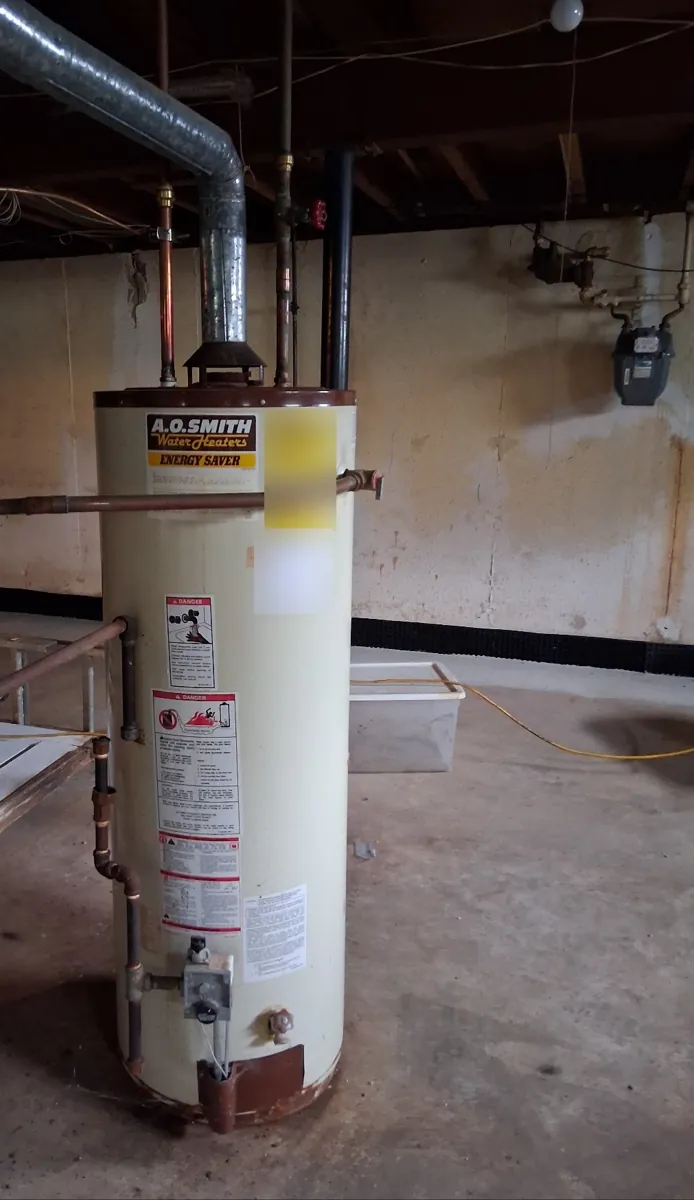
Montgomery County specifics
- Moen says the Flo is installed on the main cold water supply line, needs a 2.4 GHz Wi-Fi connection, and needs an AC outlet within 10 feet.
- Moen recommends professional installation and estimates it at about one to two hours.
- In Montgomery County homes, the main shut-off is usually where the water line enters the house, often on a basement wall.
Is this not for you?
If your home is small, someone is almost always there, and your main shut-off is easy to reach, simple floor leak sensors and knowing where your main valve is may be all you need. If your Wi-Fi can't reach the basement and you don't want to add an extender, a smart shutoff won't work well. And if your main shut-off valve is old and won't close, fix that first. That's the most important leak protection in any house.
Frequently asked questions
Does Moen Flo work without Wi-Fi?
Partly. Moen says the shutoff may still close automatically if it loses Wi-Fi, but you won't get alerts or remote control until it reconnects. It needs Wi-Fi for setup and to work fully.
What happens during a power outage?
Without the optional battery backup, it stops monitoring until power comes back. If outages are common where you live, ask about the battery backup.
Can I install a smart water shutoff myself?
It requires cutting into your main water line, so most homeowners hire a plumber. Moen recommends professional installation. A bad connection on the main line is exactly the kind of leak you're trying to prevent.
Will a smart shutoff lower my insurance?
Some insurance companies offer a premium credit for water monitoring and automatic shutoff devices. Policies vary, so call your insurer and ask before you buy.
Does it work with a well?
It depends on how your well system is set up. If your home is on a well, ask us to look at your pressure tank and main line before you buy.
Will it shut off my water when I'm filling a bathtub or watering the lawn?
It learns your normal use during the first few weeks, and you can adjust settings in the app. Long, unusual water use can still trigger an alert, which you can dismiss from your phone.