

Quick answer
Once winter arrives, the job shifts from prep to watching. Have a routine ready for cold snaps, keep an eye on your water heater, keep the sump pump discharge clear of ice and snow, keep the area around your water meter and main pipes warm, and do a quick monthly walk-through for leaks. These five winter plumbing checks help prevent frozen and burst pipes.
Fall prep vs winter checks
Fall is for getting ready: draining outdoor faucets, winterizing irrigation, insulating pipes. If you haven't done those yet, our fall plumbing checklist walks through them.
Winter is different. Freeze damage tends to happen during the coldest stretches, so the checks below are about what to do when the forecast drops, and what to keep an eye on between cold snaps.
1. Have a cold-snap routine ready
When the forecast calls for a stretch of very cold nights, do these the evening before. They come from WSSC Water's winter advice and the City of Rockville's.
- Open the cabinet doors under sinks on outside walls so warm room air reaches the pipes.
- Let a faucet drip while you're home, ideally one on an outside wall or the one farthest from your main shut-off. Moving water is much harder to freeze.
- Keep the heat on. If you're going away, WSSC says to set the thermostat no lower than 55°F.
- Close the garage door if water lines run through the garage.
- Make sure everyone in the house knows where the main shut-off valve is.
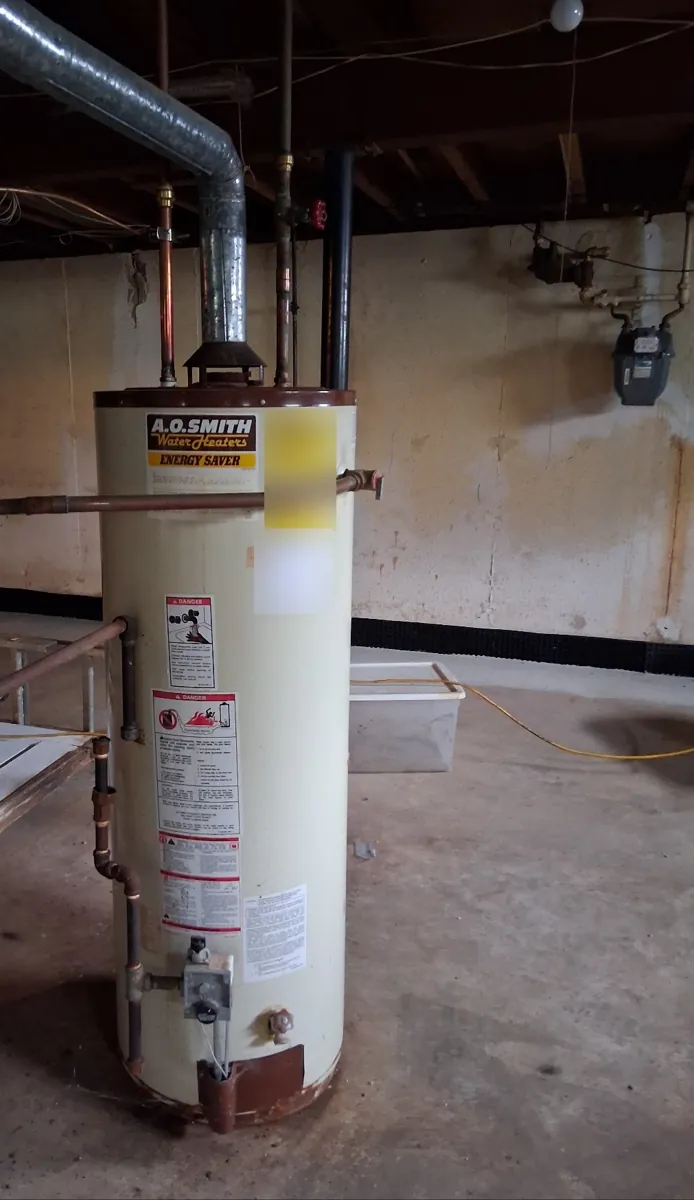
2. Watch your water heater
Incoming water is coldest in winter, so your water heater runs longer and harder. That's when weak heaters tend to fail.
Running out of hot water faster than usual, popping or rumbling sounds, rusty hot water, or water around the base are all worth a call. A relief valve that drips or a wet relief pipe also needs attention. Don't cap or plug a dripping relief valve; it's a safety device.
If the heater is past about ten years old and showing any of these signs, it's better to plan a replacement now than to lose hot water on the coldest morning of the year.
3. Keep the sump pump discharge clear of ice and snow
The sump pump's discharge line carries water out of your basement to the yard. In winter, the end of that line can freeze shut or get buried under snow, and then the pump has nowhere to send the water.
After a snowfall or a hard freeze, walk out and make sure the end of the discharge pipe is open and the water can drain away from the house. During a thaw, when snowmelt fills the pit, listen for the pump running. If it runs and runs without the pit going down, the discharge line may be frozen.
4. Keep the meter area and main pipes warm
WSSC Water advises keeping areas where meters and interior pipes are located at or above 55°F. In many Montgomery County homes the main water line comes in through a basement wall, and it can sit in the coldest corner of the house.
Don't block heat to that area with stacked boxes or holiday storage, and keep the main shut-off easy to reach. If you think your meter itself has frozen, call your water utility (City of Rockville or WSSC Water). The City of Rockville says property owners are responsible for frozen or broken pipes on their property and inside their buildings.
5. Do a quick monthly leak walk-through
Once a month in winter, take five minutes with a flashlight.
- Check under sinks on outside walls for drips or damp cabinet floors.
- Look at pipes in unfinished basements, crawl spaces and garages for frost, sweating or drips.
- Glance at the base of the water heater and the washing machine hoses.
- Check ceilings below bathrooms for new stains.
- Our recommendation for catching hidden leaks is a smart water monitor on the main line, like Moen Flo. It runs a daily leak test, alerts your phone, and can shut off the main water automatically.
What if a pipe freezes anyway?
- Open the nearest cold-water faucet to relieve pressure.
- Warm the frozen section gently with a hair dryer if you can reach it. Never use a torch or open flame.
- Be ready to close the main shut-off. A frozen pipe can split and spray when it thaws.
- If a pipe has burst, close the main shut-off first, then call a licensed plumber.
From our jobs
 Electric water heater replacement · Bethesda, MD · October 2026Corroded Gas Flue in Bethesda: Electric Water Heater Lowered the Cost About 80 PercentOur master plumber found a corroded flue pipe on a homeowner's leaking gas water heater in Bethesda. Fixing the flue and chimney connection would have made a new gas heater expensive, so we suggested a 50-gallon electric water heater instead. It needs no flue, lowered the cost by about 80 percent, and the homeowner is happy with the result.Estimate · Sump pump · Clarksburg, MD · October 2026Clarksburg Sump Pump Tripping the Outlet and Buzzing: Repair or Replace?A Clarksburg homeowner's sump pump kept tripping its outlet, showing a red light and buzzing. They sent photos and a video for an online estimate. Here's what we recommended and why.
Montgomery County specifics
- WSSC Water advises keeping areas with water meters and interior pipes at or above 55°F, and leaving the heat set no lower than 55°F when you're away.
- WSSC Water suggests letting a faucet drip during extended cold and opening cabinet doors so warm air reaches pipes.
- The City of Rockville says property owners are responsible for repairing frozen or broken pipes on their property and inside their buildings.
Is this not for you?
Most of these checks are homeowner jobs. Call a plumber for a burst or frozen pipe you can't reach, a water heater that's leaking or out of hot water, a dripping relief valve, or a sump pump that runs nonstop. If you think your water meter has frozen, call your water utility first. If your home is on a well and the water stops in a freeze, a well contractor may need to check the pump and pressure equipment.
Frequently asked questions
How cold does it have to get for pipes to freeze?
It depends on where the pipe runs and how long the cold lasts. Pipes in outside walls, garages and crawl spaces are at risk during stretches of well-below-freezing weather, especially overnight. That's why the cold-snap routine matters most on the coldest nights.
Which faucet should I let drip?
One on an outside wall, or the one farthest from where the water enters the house. A slow, steady drip is enough to keep water moving in the line.
Should I turn my water off when I travel in winter?
For a long trip, closing the main shut-off is a good extra step, and keep the heat at 55°F or higher. If you have a boiler or other system that needs water, ask a plumber first. A smart shutoff valve can also close the water automatically if it detects a leak.
Why does my water heater run out of hot water faster in winter?
The water coming in is much colder, so the heater has to work harder to warm it. A big drop in hot water can also mean sediment buildup or a failing part, so have it checked if it's noticeably worse than last winter.
Who fixes a frozen water meter?
Call your water utility (City of Rockville or WSSC Water) if you think the meter is frozen. The City of Rockville says property owners are responsible for frozen or broken pipes on their property and inside their buildings.